

















Humans are not meant to harm and kill animals
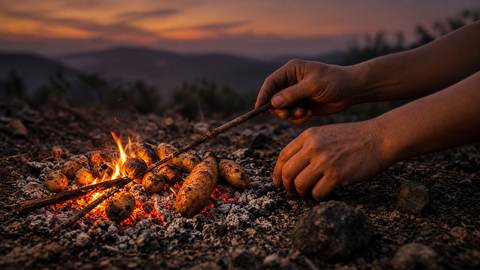
Without tools and weapons, humans have a hard time harming and killing animals[1][2]. Without cooking and vegan seasonings such as salt and other ingredients, an animal's flesh is nearly tasteless and inedible[3][4]. Our nails and teeth are flat[2]. Our jaws can grind side to side, while a carnivore's can only move up and down[2], and we sweat through our pores rather than our tongues[5]. Humans see in color, which lets us tell fruits apart from other plants[6], and our night vision is limited[8]. Carnivores have the reverse: limited color vision and good night vision[7][8]. Many herbivores have much larger canines than humans do[9][10][11][12]. Before agriculture, humans ate 150g+ of fiber a day[13]. Evidence from teeth and stool shows that some prehistoric humans, including certain Neanderthal populations, ate no meat or animal products at all[14][15].
- Without tools and weapons, humans have a hard time harming and killing animals. Our nails and teeth are flat and don’t go through hide[1][2]
- Our jaws grind side to side, while a carnivore’s can only go up and down[1]
- We sweat from our pores, not from our tongues[1][2]
- Humans see in color to tell fruit from other plants, and we see poorly at night; carnivores have it the other way around[1][2][3]
- Many animals that eat plants have much larger canines than humans[1][2][3][4]
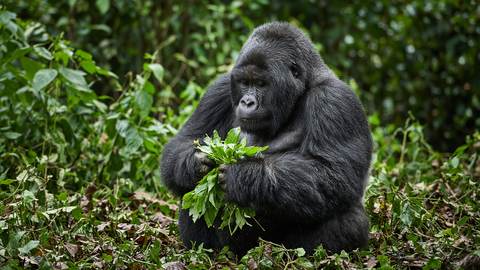
- Inland brown and grizzly bears get about 80 to 90 percent of their food from plants[1][2]
- Without cooking and vegan seasonings such as salt, an animal’s flesh is nearly tasteless and inedible[1][2]
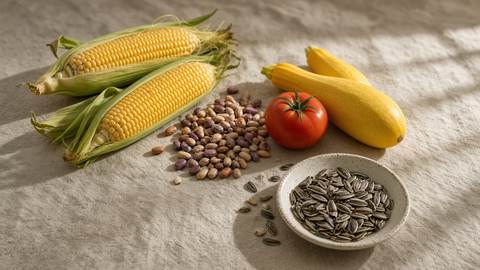
- Humans ate 150 grams or more of fiber a day before agriculture. Most people now eat about 15.[1][2]
- Some Neanderthals left no meat in their teeth or stool — only mushrooms, pine nuts, and moss[1][2]
- About 780,000 years ago, early humans were already crushing nuts, seeds, and roots from at least 55 food plants[1][2]
- In Genesis, the first world is plants only. Adam and Eve, made in God’s image, were given every seed-bearing plant. Killing comes later, as a fall from the ideal.[1][2]
- Hindu, Jain, and Buddhist teaching puts not harming at the center[1][2][3]
- Dietitians in the US, Britain, Canada, Italy, and at WHO Europe say a planned vegan diet can meet your needs[1][2][3][4]